
Memory HHI Concentration: The Pricing Power Shift
Memory markets have always been cyclical, but the structure of the cycle can change dramatically when industry concentration rises. For investors studying AI storage and computing power themed ETFs and index derivatives, this structural shift matters because memory pricing is not determined solely by unit demand. The number of meaningful suppliers, the distribution of production capacity, technology leadership, inventory discipline, and the intensity of AI-related demand can all influence how quickly supply responds to changes in consumption.

The Herfindahl-Hirschman Index, commonly known as HHI, provides one way to think about this structure. Rather than focusing only on the largest individual company, HHI captures the concentration of market share across an industry. A rising HHI can indicate that a smaller group of companies controls a greater portion of production or revenue. In memory, that distinction becomes particularly important because a concentrated supply base can alter the balance between buyers and sellers.
For AI storage investors, the question is not simply whether memory concentration is high. The more interesting question is what a changing concentration structure means for pricing power, earnings volatility, capital expenditure, and the behavior of ETFs and index derivatives tied to memory and AI infrastructure.
Why HHI Matters in the Memory Cycle
Memory differs from many semiconductor markets because products are relatively standardized within technology generations. DRAM and NAND manufacturers compete intensely on cost, density, yield, process technology, and capacity. When many suppliers expand simultaneously, supply can quickly exceed demand, creating severe pricing pressure. When capacity growth becomes more disciplined, the same market can move in the opposite direction.
HHI helps frame this dynamic by measuring how concentrated market shares are. If production is distributed across many companies, the industry has a lower concentration level. If a small number of manufacturers account for most of the market, the HHI rises.
A higher concentration level does not automatically guarantee higher prices. Buyers can still negotiate aggressively, inventories can weaken demand, and technological transitions can create temporary oversupply. Nevertheless, concentration can change the industry's ability to absorb shocks and coordinate investment behavior through market incentives.
From an ETF perspective, this is important because a concentrated memory industry can create a different earnings profile from a fragmented semiconductor market. A small change in memory pricing can have an outsized effect on the revenue and margins of major suppliers, which can then influence the performance of memory-heavy indexes.
AI Is Changing the Economics of Memory
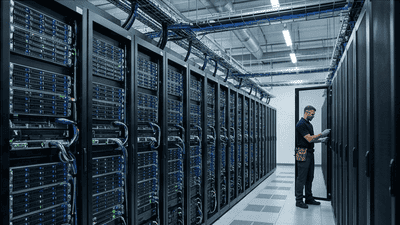
The rise of artificial intelligence has added a new layer to memory economics. Traditional computing required substantial memory capacity, but advanced AI systems increasingly demand both capacity and bandwidth. High-bandwidth memory, advanced DRAM architectures, enterprise SSDs, and large-scale storage systems are becoming strategic components of AI infrastructure.
This changes the nature of demand. AI accelerators cannot operate efficiently without sufficient memory bandwidth, and large AI clusters require enormous amounts of data to be stored and transferred. As a result, memory is no longer simply a supporting component that can be evaluated independently from computing power.
That shift can strengthen the pricing relevance of advanced memory products. When a particular memory technology becomes critical to system performance, customers may have fewer practical substitutes in the short term. This can create a different bargaining relationship from conventional commodity memory markets.
However, the effect is uneven. HBM can experience tight supply while conventional DRAM or NAND remains relatively balanced. An ETF labeled around AI storage may therefore contain companies with very different pricing sensitivities, depending on their product mix.
Concentration and Pricing Power Are Related but Not Identical
It is tempting to assume that a higher HHI automatically means greater pricing power. The reality is more complicated. Pricing power depends on both the number of suppliers and the ability of those suppliers to differentiate their products.
A highly concentrated commodity market can still experience weak pricing if end-market demand collapses. Conversely, a moderately concentrated market can produce strong pricing when customers urgently need a specialized product with limited alternatives.
This is why AI memory provides an interesting case. HBM is technically more differentiated than many conventional memory products. Packaging requirements, thermal characteristics, bandwidth, yield, qualification cycles, and integration with advanced accelerators can all create barriers to rapid substitution.
Consequently, the effective pricing power of a memory supplier may depend not only on its overall market share but also on its share of strategically important products. An HHI calculated across the entire memory market may therefore tell only part of the story.
From Commodity Memory to Strategic Memory
One of the most important developments in AI infrastructure is the gradual movement from commodity-style memory economics toward strategic memory economics. Traditional DRAM and NAND markets remain highly cyclical, with pricing strongly influenced by inventory and capacity utilization. AI-oriented memory introduces additional constraints because performance requirements can be much more demanding.
For example, an accelerator system may be designed around a specific memory bandwidth and packaging architecture. If qualification of an alternative supplier takes significant time, the buyer may not be able to switch immediately even if another supplier offers a lower price.
This creates a potential difference between nominal market share and effective market power. A supplier with a smaller overall memory footprint could still have considerable influence within a specialized AI memory segment if its products are difficult to replace.
For ETF investors, this distinction can help explain why two memory companies with similar exposure to the broader semiconductor cycle may display very different earnings sensitivity. Product mix matters as much as headline market share.
HHI and the Capital Expenditure Cycle
Memory concentration also affects capital expenditure. In a fragmented industry, individual companies may have strong incentives to expand aggressively in order to gain market share. If several competitors make the same decision at the same time, the resulting capacity can overwhelm demand and trigger a downturn.
When the supplier base becomes more concentrated, capacity decisions can have a greater impact on the entire market. Each major producer represents a meaningful portion of global supply, so large investment programs can materially change the supply-demand balance.
AI demand complicates this equation. Memory manufacturers may be reluctant to add excessive capacity if they believe AI demand is strong but uncertain. At the same time, failing to invest could result in shortages if accelerator production expands faster than expected.
This creates an unusual investment cycle in which capacity discipline becomes a strategic variable. The market is not simply asking how much demand will grow. It is also asking how much supply the major manufacturers are willing and able to add.
The HBM Effect on Memory Economics

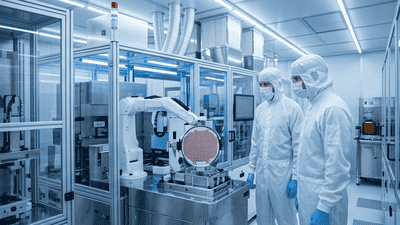
HBM provides perhaps the clearest example of concentration interacting with AI demand. Its manufacturing process involves sophisticated DRAM technology, advanced packaging, stacking, testing, and system-level integration. The resulting supply chain has more technical constraints than conventional memory products.
As AI accelerators become more powerful, HBM requirements can increase rapidly. This creates a situation where a relatively small number of qualified suppliers can influence the availability of a critical component. The economic impact extends beyond the memory companies themselves to accelerator manufacturers, foundries, packaging providers, and data-center operators.
From the perspective of an AI computing ETF, this means memory concentration can become an indirect driver of semiconductor valuations. If HBM supply becomes constrained, the bottleneck can influence the shipment schedule of accelerators. If supply expands too quickly, pricing pressure can spread through the memory ecosystem.
Therefore, investors may need to treat HBM concentration as an infrastructure variable rather than simply a memory-company variable.
NAND Adds a Different Dimension
NAND provides a useful contrast. NAND demand is closely connected to smartphones, PCs, enterprise storage, cloud infrastructure, and increasingly AI data systems. Enterprise SSD demand can grow alongside AI infrastructure, but the NAND market remains strongly influenced by capacity, inventory, and storage pricing.
When AI-related enterprise storage demand strengthens at the same time that suppliers maintain capacity discipline, NAND pricing can respond differently from historical commodity cycles. Yet the market can still experience significant volatility if consumer electronics weaken or inventories accumulate.
This is why a broad AI storage index should not be interpreted as a simple proxy for HBM. HBM, DRAM, NAND, enterprise SSDs, and storage controllers have different supply structures and demand drivers. Their concentration metrics can also tell different stories.
How Pricing Power Can Flow Through the Index
Changes in memory pricing can affect AI infrastructure indexes through several channels. The first is direct earnings exposure. Higher memory prices can improve revenue and gross margins for suppliers when volume remains healthy. The second is valuation exposure. Investors may raise expectations for earnings growth when pricing conditions improve.
The third channel is downstream. If memory remains scarce, AI accelerator production can become constrained, potentially affecting semiconductor companies further along the value chain. If memory becomes more abundant and affordable, system builders may be able to expand capacity more rapidly.
This creates a feedback mechanism between memory pricing and AI infrastructure spending. Strong AI demand supports memory demand, tight supply supports memory pricing, improved supplier profitability supports capital expenditure, and additional capacity eventually changes the supply equation.
The cycle therefore contains its own reversal mechanism. Pricing power can encourage investment, while investment can eventually weaken pricing power.
ETF Weighting Can Magnify the Concentration Story
AI storage and computing power ETFs do not necessarily mirror the economic concentration of the underlying memory market. Their weighting systems can amplify or dilute it.
A market-cap-weighted index may place substantial weight on the largest memory manufacturers, making its performance highly sensitive to their earnings outlook. An equal-weight index can distribute exposure more broadly. A thematic index may also include semiconductor equipment, foundry, networking, and accelerator companies, reducing the direct impact of memory pricing while preserving indirect exposure.
Investors therefore need to distinguish industry concentration from portfolio concentration. A highly concentrated memory industry does not automatically mean an ETF is highly concentrated in memory companies. Conversely, a diversified index may still have substantial economic exposure to a small group of companies if several constituents depend on the same memory cycle.
Index Derivatives Add Another Layer
Derivatives based on AI storage or semiconductor indexes introduce additional sensitivity to changes in expectations. Options, futures, and other instruments can respond rapidly to earnings revisions, memory pricing signals, capital expenditure announcements, and macroeconomic developments.
When concentration is high, an earnings surprise from one major supplier can influence the broader index more strongly than it would in a fragmented industry. Volatility can therefore increase around memory pricing updates, production guidance, technology transitions, or major customer announcements.
This does not mean derivatives simply amplify upside or downside. Their behavior depends on positioning, implied volatility, time horizon, and the composition of the underlying index. But the concentration structure can make specific corporate events more relevant to index-level pricing.
Three Possible Paths for Pricing Power
One possible path is sustained AI-driven tightness. If AI accelerator demand continues to expand rapidly and advanced memory supply remains constrained, pricing power could remain concentrated among qualified suppliers. In this environment, memory-heavy ETFs could become particularly sensitive to earnings revisions and capacity allocation decisions.
A second path is controlled normalization. Manufacturers could gradually expand production while AI demand grows at a healthy but manageable rate. Pricing could remain profitable without reaching extreme levels, creating a more stable environment for memory and AI infrastructure indexes.
A third path is supply-led compression. If capacity expansion outpaces demand, concentration alone may not prevent pricing deterioration. Even a small number of large suppliers can compete aggressively when utilization falls or inventory rises. In such an environment, high HHI would coexist with weak pricing power.
Why the Direction of HHI May Matter More Than the Absolute Number
For investors, the trend in concentration can sometimes be more informative than a single HHI observation. A rising concentration level may indicate consolidation or increasing dominance by a few suppliers. A declining HHI may suggest new entrants, expanding capacity, or stronger competition.
More importantly, the direction of concentration can interact with the technology cycle. If HHI rises while AI memory demand accelerates, the industry could experience a stronger shift in bargaining power. If HHI falls while demand remains strong, buyers may gain more flexibility. If HHI rises while demand weakens, concentration may provide some structural support but cannot eliminate cyclical pressure.
This makes HHI most useful when combined with other indicators such as utilization, inventories, wafer starts, capital expenditure, memory contract pricing, spot pricing, and AI server deployment.
A Broader Framework for AI Storage Investors
Memory concentration should therefore be viewed as one component of a broader AI infrastructure framework. The first question is how concentrated supply is. The second is which product segments are concentrated. The third is whether customers have practical substitutes. The fourth is whether demand is structural or cyclical. Finally, investors can consider how these factors are represented in the ETF or index they are analyzing.
This framework also prevents an overly simplistic interpretation of pricing power. A supplier can have a strong technological position without controlling the broader market. An industry can be concentrated without generating consistently high margins. An ETF can have diversified holdings while remaining exposed to the same underlying memory cycle.
The real analytical advantage comes from connecting these layers rather than treating HHI as a standalone signal.
Conclusion
Memory HHI concentration provides a useful lens for understanding how pricing power can evolve as AI transforms the semiconductor and storage landscape. The rise of HBM, enterprise storage, and AI-oriented memory demand is making certain memory products more strategically important, while a concentrated supplier base can increase the market impact of individual capacity and investment decisions.
For AI storage and computing power themed ETFs and index derivatives, the implications extend beyond the memory sector itself. Changes in memory pricing can influence supplier earnings, accelerator availability, data-center capital expenditure, semiconductor valuations, and ultimately index performance.
Yet concentration should never be interpreted as a guarantee of pricing power. Demand, inventory, capacity expansion, technology transitions, customer bargaining strength, and product differentiation all remain critical. The most useful perspective is to watch how concentration changes alongside AI demand and supply discipline.
As AI infrastructure continues to scale, memory may increasingly shift from being viewed as a cyclical commodity input toward a strategic component of computing capacity. That transition could make changes in market concentration more important than they were in previous memory cycles, while also making the structure of AI-focused indexes and derivatives increasingly sensitive to the companies controlling the most critical layers of the memory ecosystem.